“Who is the dreamer?”
Twin Peaks: The Return
INTRODUCTION
The Liminal is an archetype which means the space in between somewhere and somewhere else. It can be frightening because it’s full of uncertainty and anything goes, but that is why it can be so liberating.
Liminal people and creatures don’t have a clear place in the social order, just as queer people are often been told that their identities are a phase on the way to something more known and acceptable. But what if the person isn’t between two things? What if they simply are?
Embodying a queer identity is refusing the idea that there are only a certain amount of categories to begin with.
Liminal spaces are sacred spaces where identities can be shed, tried on, and where transformation can happen. Where the old world or identity has ended but the new one hasn’t quite begun. And perhaps the most queer thing about the liminal is that it asks us to stop thinking of the threshold as somewhere we have to cross on the way to somewhere more defined.
Maybe the space between is a place in itself, and maybe we can stay here. And just maybe there is nothing wrong with being neither here nor there. And wherever or whoever we are we are right here.
Light: Enjoy the sacredness of the liminal to not rush to define everything. Spend sometime in this mythical place and the possibilities.
Shadow: The shadow of this archetype can be a refusal to define who we are and what is important to us through fear of social judgement.
Origins
“Neither here nor there; they are betwixt and between the positions assigned and arrayed by law, custom, convention, and ceremonial.”
Victor Turner, The Ritual Process (1969) (1)
We humans like to put things, and people, into boxes. We like labels, because so much of our societies are ruled by unspoken expectations of how we should behave. And when something or someone exists between categories, we don’t know which social rules apply.
Liminal comes from the Latin word limen which means threshold. It can be a doorway, a border, a bridge, or a corridor. But liminality doesn’t have to be physical. We can emotionally, psychologically or spiritually exist in the liminal, too. It’s neither here no there, but is a place in itself.
Anthropologist Arnold van Gennep first coined the term liminal in his 1909 book Les Rites de Passage. (2) The liminal is originally a temporary state. You leave one thing behind, you enter the threshold, and then, eventually, you emerge somewhere else.
Another anthropologist, Victor Turner, was also fascinated by the the strange in-between period where we are “betwixt and between.” (3)
Because what happens if you don’t want to come out the other side? If the threshold itself becomes the final destination?
The Tibetan word bardo is generally translated as an intermediate or transitional state. It usually refers to the state between death and rebirth, although Tibetan Buddhist traditions also use the term more broadly (4)
Both interpretations imagine a magical state or place away from everyday drudgery where ordinary rules and categories no longer apply, and we can change.
Examples in media
Alice’s Adventures in Wonderland - Lewis Carroll, 1865
The Monk - Matthew Lewis, 1796
Dracula - Bram Stoker, 1897
The Wizard of Oz - film, 1939
The Others - film, 2001
Spirited Away - film, 2001
Eternal Sunshine of the Spotless Mind - film, 2004
Life on Mars - BBC television series, 2006–2007
Orlando - Virginia Woolf, 1928 / film, 1992
Twin Peaks - television series, 1990–1991 / 2017
Mulholland Drive - film, 2001
Picnic at Hanging Rock - Joan Lindsay, 1967 / film, 1975
Under the Skin - film, 2013
The Lighthouse - film, 2019
Piranesi - Susanna Clarke, 2020
The City & the City - China Miéville, 2009
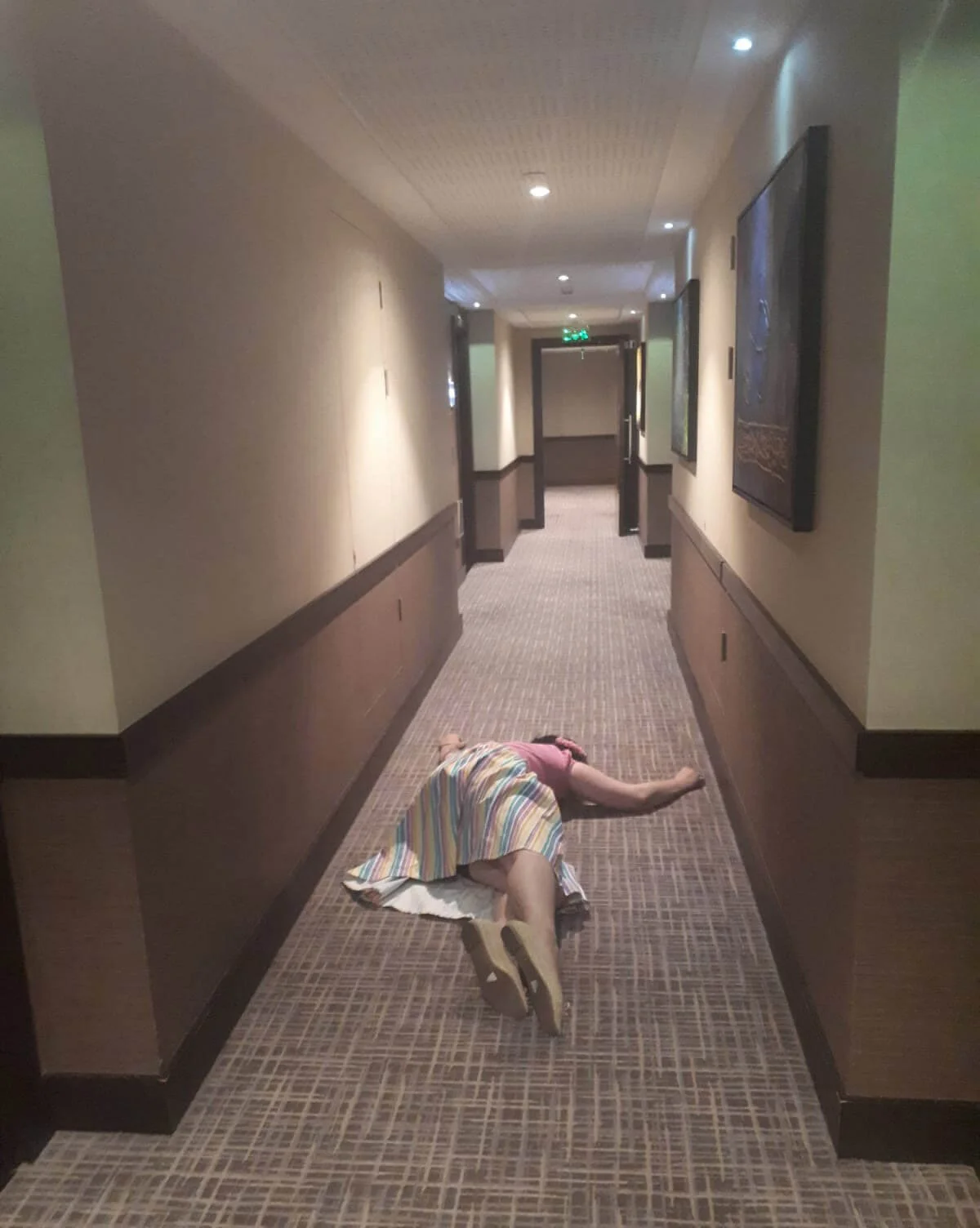
Photo by me
Queer & Uncanny analysis
Liminality & Thresholds
Liminal spaces are often creepy. Freud’s famous essay The Uncanny describes the uncanny as something that is simultaneously familiar and unfamiliar. (5)
An example of this are when we see images of large scale disasters. They can be throughly unsettling, not just because of the loss of life and destruction, but because a normal human space where people were once living and working is now distorted, destroyed or eerily quiet. In global disaster film The Day after Tomorrow, the shot where the large tanker ship sails down a flooded New York street had stayed with me years later for its creepiness. (6)
Some fantastically scary scenes in horror and thrillers play off the normality of daily life, something terrible happening in what should be a safe normal place. Alfred Hitchcock’s classic The Birds is an excellent example, as it’s only when we realise the birds are gathering so unnaturally that we begin to feel afraid. (7)
A liminal space, creature or object works in exactly this way. Our bedroom is familiar, but that bedroom at 3am, empty of furniture and illuminated by a light that nobody switched on?
Something feels wrong.
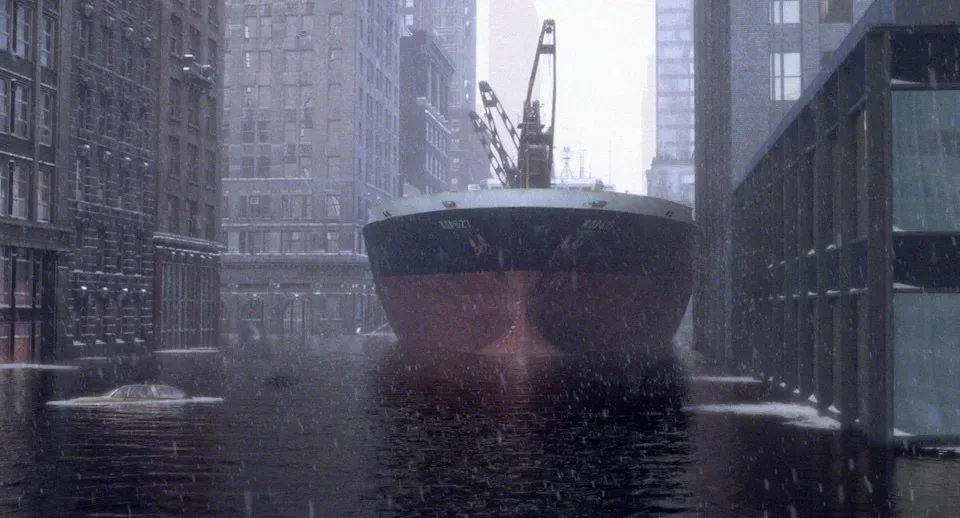
Still from The Day After Tomorrow. USA: 20th Century Fox, 2004.
Characters who don’t belong
"You only are free when you realize you belong no place, you belong every place, no place at all. The price is high. The reward is great."
Maya Angelou (8)
Stories about liminal characters are often stories about people who don’t belong. Angel from Buffy the Vampire Slayer is a good example. Angel is a vampire with a soul, and is both a monster and person simultaneously. The vampire is already an archetype and liminal creature, but Angel makes that ambiguity explicit. His entire identity depends upon occupying the space between two supposedly incompatible things. Is he man or monster? Threat or love interest? (9)
Monsters are useful for telling stories about people who exist outside social norms because the monster can embody whatever society has decided should not exist. But what if the problem isn’t that the monster doesn’t belong? What if the problem is our insistence that everything must belong somewhere?
Liminality can be a useful way of looking at queerness, as people who are othered often feel like they don’t belong in neat social categories. In Virginia Woolf’s novel Orlando, protagonist Orlando begins life as a man and later becomes a woman. But though the character’s body changes and they have to conform to society standards such as changing how they dress, Orlando remains Orlando. (10)
So the novel therefore ultimately asks us, what makes us the same person when everything about us changes?
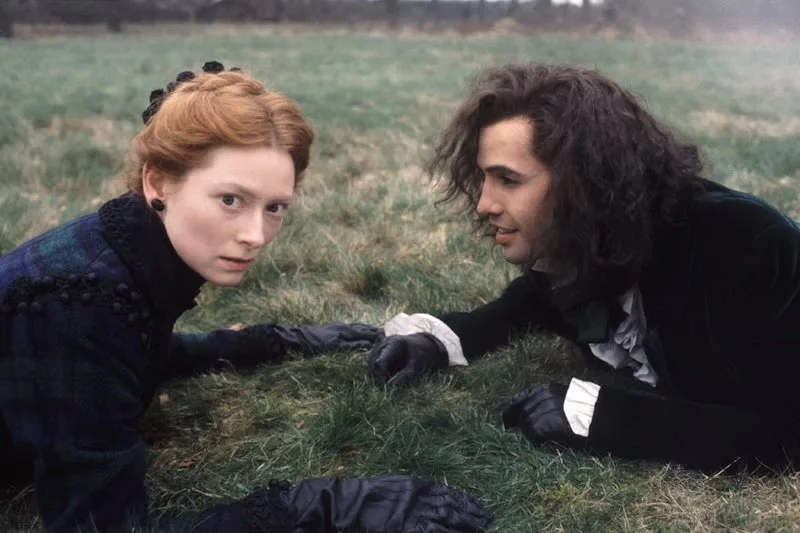
Still from Orlando.
Who is the Dreamer?
The ultimate liminal state is the space between life and death. This is why ghosts, near-death experiences and purgatory appear so frequently in Gothic stories.
Characters can also exist in liminal states. For example, in Dracula, is Jonathan Harker a guest or prisoner in Dracula’s castle? Is he just a tasty snack, or is Dracula letting him live for another purpose? (12)
Perhaps the most iconic threshold in literature is Alice’s rabbit hole from Alice in Wonderland. People talk of ‘going own the rabbit hole’ to describe exploring something strange and otherwordly, usually referring to conspiracy theories. Like the logic of a conspiracy, Alice falls through the boundary between worlds into a place where ordinary rules don’t apply. Language, logic, identity and physical reality are all unstable in Wonderland. (14) Alice herself grows and shrinks, time behaves strangely, people contradict themselves, and words mean what they appear to mean.
In this world where everything is topsy turvy, Alice begins to question who she is, and that is where the liminal can become queer.
Queer theory scholars have used liminality to question the assumption that identity must fit neatly into binary categories. In Loren March’s literature review on queer and trans geographies, they describe liminality as a way of unsettling binary constructs, and highlighting lived experiences of “in-betweenness.” (15)
Many strands of Queer Theory question categories and binaries themselves. Perhaps a threshold is not just a line-but a landscape. (16)
Sacred spaces
In the liminal it’s natural to not know where you are going and how you’ll get there, as people who come into liminal spaces are themselves at a crossroads, emotionally, mentally or physically.
Dante’s epic poem Inferno begins in a dark wood, having lost his way. The forest is a very old and potent archetype, which is why it appears in so many fairytales and myths. The woods or forest was somewhere very familiar that could at the same time become very unfamiliar if you lost the path. (17)
Many fantasy and portal stories often begin with a familiar object or landscape that is the threshold of another world. In Chronicles of Narnia it was a wardrobe, in Alice in Wonderland it was a rabbit hole, in TV show Life on Mars it was a road. (18) That this special place is hidden inside the ordinary world in the mundane, is maybe this is why liminal spaces can also feel sacred.
In Life on Mars, police officers exist in an in-between purgatory world that is neither in heaven or hell, because they have unfinished business. Protagonist Sam Tyler wakes up in 1973 after being hit by a car in 2006. He spends the show debating if he is alive or not, only to decide at the end that he was more ‘alive’ and happy in 1973 than he was in his ordinary life.
The strange world gave him space and time to resolve his unfinished business, and move on. The liminal state was not just a waiting room, but a special world where transformation could happen.
Ghosts also exist after death, in the world still, but not of the world anymore. They are very much a liminal creature for this reason.
Nicole Kidman’s character in film The Others is a ghost who doesn’t know she’s dead (19). She’s trapped in the house and grounds she lived in before death as the world outside the gates is thick with fog. As she’s not aware that she’s dead, she believes she is protecting her home from intruders, but the film gradually reverses our understanding of who belongs in the house.
Grace is obeying the same laws of physics she didn’t think to question when she was alive, not realising as a ghost she can pass through any wall she wants. The walls she can’t pass through in this film could be seen as representing her own mental limitations, and the truth she can’t face. It’s in this special world she is able to confront what she did to her children, and have some sort of happy ending.
In Eternal Sunshine of the Spotless Mind, memory itself becomes a liminal space inside a dream like landscape (20). Joel moves through his memories while they are being erased, aware that he’s dreaming, a phenomenon that is even called a ‘liminal dream’. He can revisit moments from his relationship with Clementine and move between different periods of his life. He realises by experimenting that he can make changes to his reality, like hiding Clementine inside memories where she doesn’t belong. His memories become like a sandbox where he can test ideas and speak his true feelings in a safe place. And this allows him to make similar changes while he’s awake.
These liminal spaces like the forest can be a place of spiritual initiation where the hero is tested and faces their fear for the first time, and comes out changed. We often talk about going into a metaphoric the ‘dark night of the soul’ and coming out changed.
They can be special spaces where ordinary rules don’t apply and your usual communities aren’t around to criticise you. It’s a safe space to try new things, get our your comfort zone or even become someone new.
In story theory this point in a story is called ‘the special world’, and the hero often goes through a change in appearance to signal that they’re open to being changed, even if it feels like a costume. Shrek wearing a knights helmet in film Shrek is a great example. (21)
So the liminal is both frightening and potentially liberating. Where the old self has ended but the new self hasn’t formed yet.
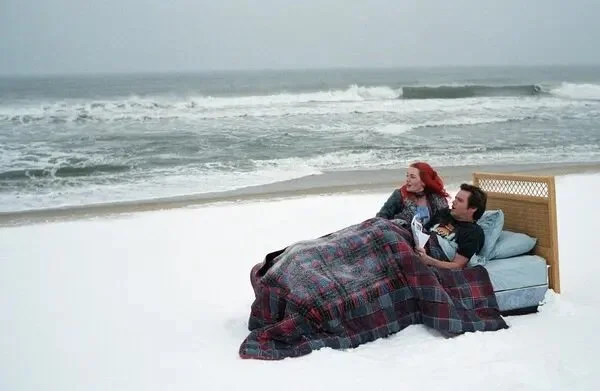
Still from Eternal Sunshine of the Spotless Mind
Associated Archetypes
Door/ Gateway
Forest
Cave
Island
Crossroads
Lighthouse
Pier
Footnotes
(1) Turner, V. (1969) The Ritual Process: Structure and Anti-Structure. Chicago: Aldine Publishing, p. 95.
(2) Van Gennep, A. (1909) Les Rites de Passage. Paris: Émile Nourry.
(3) Turner, V. (1969) The Ritual Process: Structure and Anti-Structure. Chicago: Aldine Publishing, p. 95.
(4) The term bardo refers to an intermediate or transitional state. In Tibetan Buddhism it is most commonly associated with the state between death and rebirth, although it’s very different from the Western Gothic idea of purgatory, so I don’t want to conflate the two. See Tibetan Book of the Dead and its description of bardo as a state of suspended reality between death and rebirth.
(5) Freud, S. (1919) ‘The Uncanny’, in The Standard Edition of the Complete Psychological Works of Sigmund Freud, Vol. XVII. London: Hogarth Press, pp. 217–256. Freud’s essay examines the unsettling effect produced when something simultaneously feels familiar and strange.
(6) The Day After Tomorrow. Directed by Roland Emmerich. USA: 20th Century Fox, 2004.
(7) The Birds. Directed by Alfred Hitchcock. USA: Universal Pictures, 1963.
(8) Maya Angelou said these words during a televised interview with journalist Bill Moyers on November 21, 1973.
(9) Buffy the Vampire Slayer. Created by Joss Whedon, performances by Sarah Michelle Gellar, Alyson Hannigan, and Nicholas Brendon, Mutant Enemy, 1997–2003.
(10) Woolf, V. (1928) Orlando: A Biography. London: Hogarth Press. Also I recommend you watch the film starring Tilda Swinton! (1992)
(11) Twin Peaks: The Return. Created by Mark Frost and David Lynch. Showtime, 2017.
(12) Stoker, B. (1897) Dracula. London: Archibald Constable and Company.
(13) Lewis, M.G. (1796) The Monk: A Romance. London: J. Bell.
(14) Carroll, L. (1865) Alice’s Adventures in Wonderland. London: Macmillan.
(15) March, L. (2021) ‘Queer and trans* geographies of liminality: A literature review’, Progress in Human Geography, 45(3), pp. 485–506. March examines how queer and trans approaches to liminality can unsettle binary assumptions and foreground lived experiences of in-betweenness.
(16) Judith Butler’s Gender Trouble is a great book to start with, or for a wider and easier read try Queer: A graphic history by MJ Barker & J Scheele.
(17) Dante Alighieri, Inferno, Canto I. Dante begins his journey through the afterlife after finding himself lost in a ’dark wood’.
(18) Life on Mars. Created by Matthew Graham, Tony Jordan and Ashley Pharoah. BBC, 2006–2007.
(19) The Others. Directed by Alejandro Amenábar. Spain/USA: Cruise/Wagner Productions, Dimension Films, 2001.
(20) Eternal Sunshine of the Spotless Mind. Directed by Michel Gondry. USA: Focus Features, 2004.
(21) Joseph Campbell is the go-to for story structure, but you can also check out the very readable Save the Cat book series by Blake Snyder, The Hero’s Two Journeys by Michael Hague and Chris Vogler.
Bibliography / Reading lists
Below are key texts and articles that I found particularly important that you may want to pick up and read for further information on the topics.
You can find my ongoing Queer Uncanny reading lists here.
The Liminal:
Van Gennep, A. (1909) Les Rites de Passage. Paris: Émile Nourry. Really interesting and in-depth look at the idea of rites of passage.
Turner, V. (1969) The Ritual Process: Structure and Anti-Structure. Chicago: Aldine. Contains Turner’s concept of the liminal person/creature as “betwixt and between”.
March, L. (2021) ‘Queer and trans* geographies of liminality: A literature review’, Progress in Human Geography, 45(3), pp. 485–506. Useful for thinking about how queer identities challenge the binary.
Robertson, N. (2024) ‘Liminality and Affect: Knowing and Belonging among Unscripted Bodies’, in Gendering Place and Affect. Explores ideas of queer bodies and liminal spaces.
Freud, S. (1919) ‘The Uncanny’. The classic essay on the uncanny and the relationship between the familiar and unfamiliar. A bit dry- you can read good summaries of thios essay in other places such as Kelly Hurley’s book below:
Hurley, K. (1996) The Gothic Body: Sexuality, Materialism, and Degeneration at the Fin de Siècle. Cambridge: Cambridge University Press. A really useful book for thinking about Gothic bodies that resist categories. One of the core texts about gothic bodies.
Creed, B. (1993) The Monstrous-Feminine: Film, Feminism, Psychoanalysis. London: Routledge. Great book for thinking about bodies, monsters and gender. It’s fantastic- just read it anyway!
On queer approaches to liminality, I found this book useful- Robertson, N. (2024) ‘Liminality and Affect: Knowing and Belonging among Unscripted Bodies’, in Gendering Place and Affect: Attachment, Disruption and Belonging.
And the phenomenal Queer Phenomenology by Sara Ahmed that got me to grips with queer phenomenology- Ahmed, S. (2006). Queer phenomenology: Orientations, objects, others. Duke University Press.
And the book that broke down phenomenology enough for me to get to grips with it- Trigg, Dylan. (2012). The Memory of Place: A Phenomenology of the Uncanny. Athens, OH: Ohio University Press.
And as always, these books have been particularly useful for my research into archetypes: Archive for Research in Archetypal Symbolism (2010) The Book of Symbols: Reflections on Archetypal Images. Cologne: Taschen; and Cirlot, J.E. (1971) A Dictionary of Symbols. Translated by J. Sage. Harmondsworth: Penguin Books.
Illustration notes
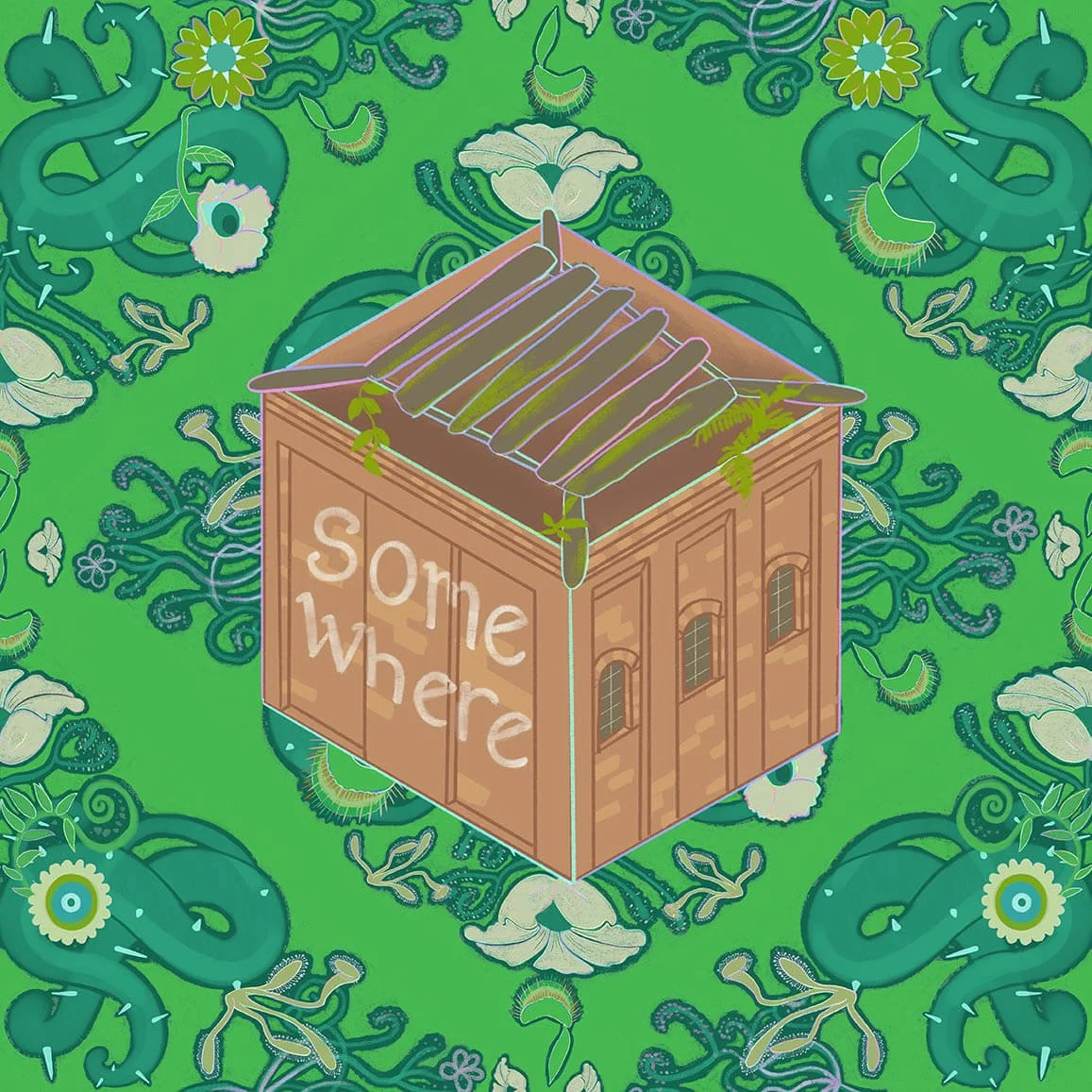
The image I’ve drawn for this month was inspired by ghost signs on buildings. I read a great library book about ghost signs that inspired the illustration.
I love the typography from vintage murals that can still be seen on the side of buildings. And I love that the building’s history can still be seen, even if the purpose of the building has completely changed.