Season 1: Centaur
More than just (W)horses
“Horses are just men extenders.”
Ken, Barbie movie (2013)
INTRODUCTION
“Two months since / Here was a gentleman of Normandy - / I have seen myself, and serv’d against, the French, / And they can well on horseback, but this gallant / Had witchcraft in’t. He grew unto [F into] his seat, / And to such wondrous doing brought his horse / As had he been incorps’d and demi-natur’d / With the brave beast.” (1)
Centaurs have a sexualised reputation compared to other mythical creatures. There’s something more primal and dangerous about them. In Greek and Roman mythology they’re often depicted as lustful, violent and not very intelligent:
“Iconographically, centaurs “symbolise lust, with all the brute violence which can reduce mankind to the level of beasts unless it is counterbalanced by spiritual strength. They are a striking image of the twofold nature of mankind- half God and half beast.” (2)
As monsters, centaurs are considered uncanny due to their half-man half-beast hybrid body.
Centaurs are a mythical creature that we more typically associate with masculinity due to their imposing bodies and toxic masculinity:
“Centaurs, male and female, lived in mountains and in forests, fed on raw flesh, could not drink wine without getting drunk, went about in herds and were very prone, if male, to rape mortal women. They represent man’s animal nature.” (3)
A lot of recent media featuring centaurs feature a sanitised version of the monster. The popular archetype of the wise centaur is often modelled from an early centaur character Chiron from Greek and Roman mythology, who was seen as an exception to his species.
And there are other depictions that feel true to the original nature of the centaur, in that they’re excellent fighters, but more honourable and sometimes kind, such as the centaurs from The Chronicles of Narnia and the Percy Jackson book series.
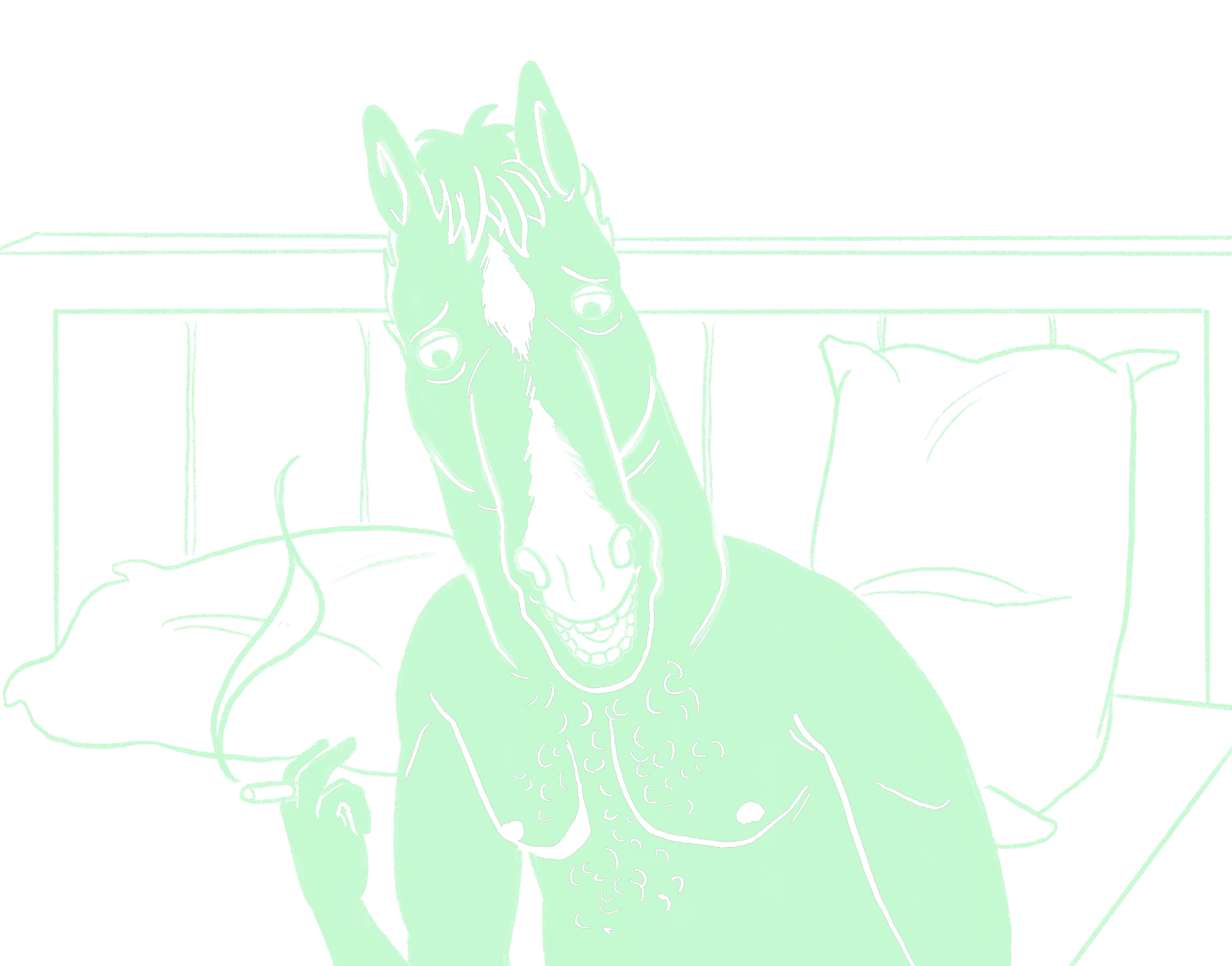
And there’s the more interesting BoJack from BoJack Horseman, who, like his centaur ancestors, was also a hot mess.
But we don’t even have to stray from the original mythology to find the queer roots of this monster!
Mythical Origins
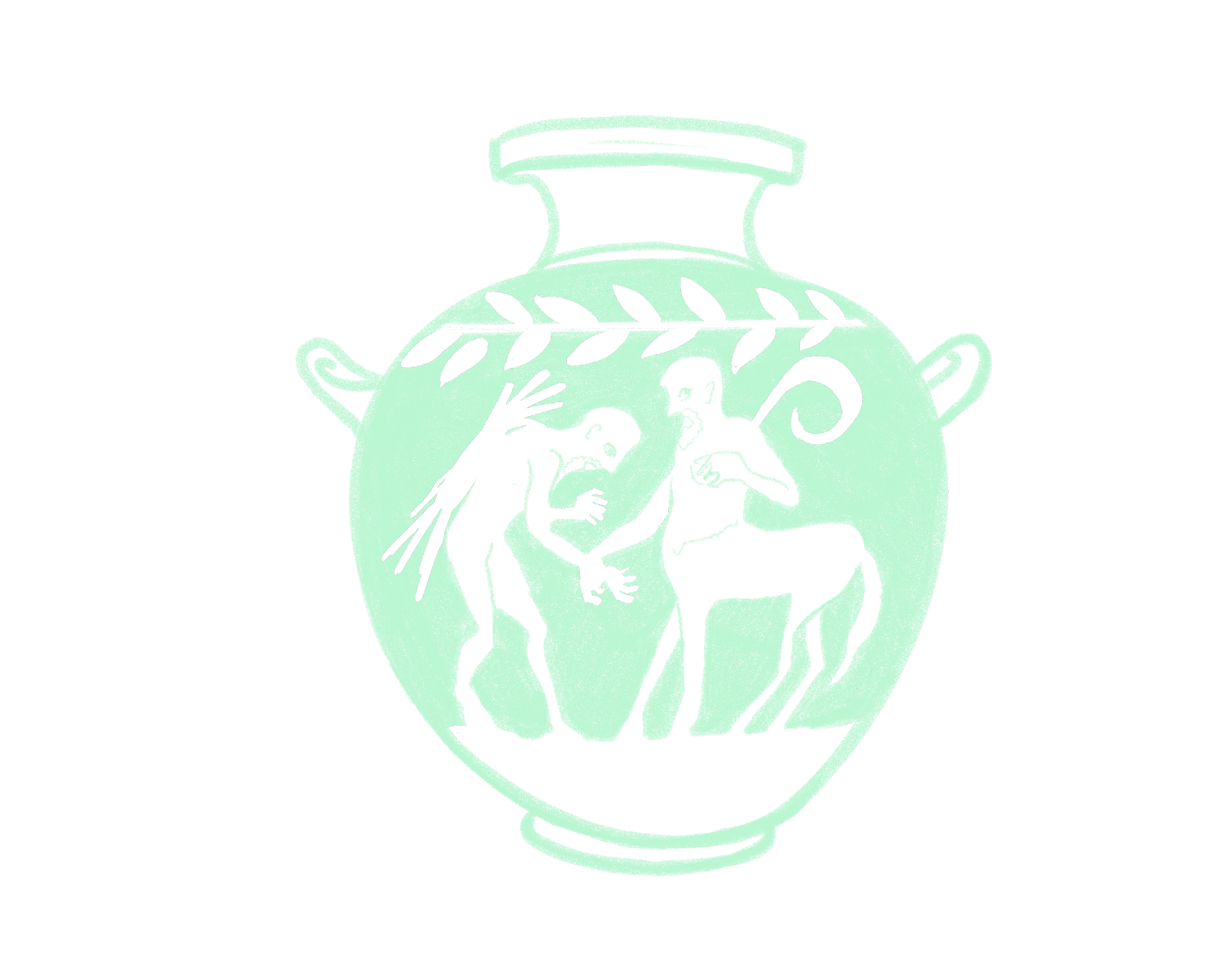
Centaurs are creatures that are half human, half horse- usually with the body of a horse and the upper torso and head of a human. They’re mostly commonly associated with Greek and Roman mythology, but the first records of them were actually seen on decorative pottery from the Kassite Dynasty in ancient Babylonia (now modern day Iraq) between 1155- 1595 BC. The theory seems to be that the myth of the centaur was exported on these pots.
The enduring image of centaurs from Greek myths is of a lustful beast carrying women off against their will. Most depictions of centaurs depicted on pottery show this same image. Or the paintings of the raping and drunken centaurs at the Lapith’s banquet.
Even their origin myths involve deviant sexuality- such as men and Gods copulating with clouds and horses.
“…ruled by wild, untrammelled instinct.” (4)
Greek and Roman mythology have are two main origin stories and ‘families’ of centaurs. In one myth, Ixion (most well known for being strapped to a continually turning, sometimes burning, wheel), copulated with a cloud in the shape of Juno/Hera that Jupiter/Zeus had created. The cloud got pregnant and the resulting child was the first centaur.

The centaur is similar to other man-beast hybrid creatures in Greek Mythology, like the satyr:
“centaurs are notable for extreme wildness and extreme self indulgence.” (7)
Another Greek myth from the writings Ovid and Pindarus tells us that it is Centarus, the son of Apollo and Stilbe and twin brother of Lapithes, who is the father of the ‘Hippocentauri.’ (centaurs):
“Centaurus, Sonne of Ixion commited buggery with the mares of Magnetia […], from whence came that mostrous birth in the upper part resembling the father and the neather the mother.” (8)
Descendants of these centaurs ate raw meat were famous for violence, raping women and drinking, and famously disrupted wedding banquet of Pirithous in the Ovid’s Metamorphosis.
Lastly, centaurs Chiron and Pholus were the descendants of Philyra and Cronos. Both Chiron and Pholus were demi-Gods and they represented strength, nobility and wisdom. They were notably friendly to humans and they had the ability to read the stars and forsee the future.
Chiron is arguably the most famous centaur and appears across Greek mythology. In all the stories Chiron is unlike the other centaurs who were “violent fierce creatures,” and was instead civilised and wise:
“[Chiron] was one of the Centaurs, but unlike the other who were violent fierce creatures, he was known everywhere for his goodness and wisdom, so much so that the young sons of heroes were entrusted to him to train and teach.” (9)
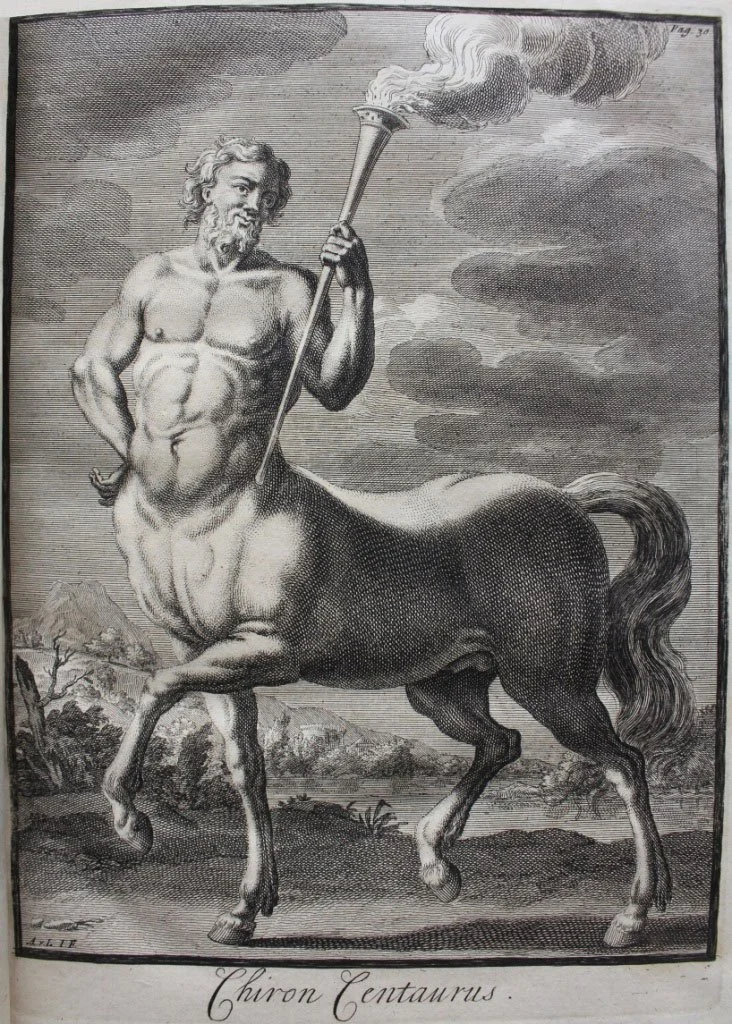
Image of Chiron the Centaur in Daniel Le Clerc, Histoire de la médecine … (Amsterdam, 1723), plate facing p. 30
Examples in media
Metamorphoses by Ovid, Odes by Pindar, and Theogony by Hesoid
Disney’s Fantasia
The Chronicles of Narnia
Percy Jackson book and film series
Bojack Horseman
The Good Place- Season 3 episode 7: The Worst Possible Use of Free Will
A book and film series I will not name, that doesn’t have a particularly interesting depiction of centaurs anyway.
Queer & Uncanny analysis
Liminality
Monsters as a rule reflect cultural anxieties, so important context here is the effect on Western culture when evolutionary biologist Charles Darwin published his groundbreaking books On the Origin of Species in 1851 and The Descent of Man in 1871. Darwin received strong backlash for suggesting theories such as humans evolving from apes.
Many medieval families around this time lived with their animals- cows, pigs, horses- in the same house- often on the ground floor, with people living on the floor above.
But Renaissance thinkers at this time were already beginning to feel that there were blurry boundaries between man and animal, whereas before this many cultures felt that animals belonged in one clear category, and humans in another. The idea that we were also animals, and similar to animals than not, quite literally horrified people.
So this new ‘Darwinian’ anxiety (10) was about the biological and physical proximity of animals, particularly domesticated ones. That’s why you’ll see many ghostly and monstrous animals in early Gothic literature. People were wondering what it meant to be human, what it meant to be an animal, and where exactly was the boundary anyway??
The Gothic as a genre is full of things that change shape, lack consistent form, have inconsistent boundaries, or aren’t what they seem, for this reason. It all made people very anxious.
Centaurs are a hybrid creature by nature- part horse and part human. They’re liminal by design, which means they’re neither one thing nor another.
Centaurs were considered monstrous because they didn’t have a fixed identity as one thing or another. This liminality was, and still is, seen as unsettling and uncanny, based on Freud’s famous essay about the uncanny being defined as something or somewhere being familiar and not familiar at the same time. People know what horses and men were separately, but mashed together as a hybrid creature? Monstrous.

I mentioned the Greek centaur myth earlier where Ixion mated with a literal cloud that appeared to him with the face and body of a Goddess. What’s interesting about one parent of the centaurs being a cloud, is that clouds are by nature changeable, and liminal in that they’re constantly in motion and change shape depending on weather conditions. So it’s fitting that a cloud; formless and boundry-less; gives birth to a dual nature creature that is neither human nor horse, but both simultaneously.
The book Metamorphoses even calls centaurs ‘cloud-born beasts’ several times, reminding us of their uncanny birth. (11)
Queer-coded masculinity and rejection of the binary
To queer the centaur archetype, we’ll also look at their bi-gendered nature:
“His Upper-part, the shape of Man, doth beare, / To teach, that, Reason must become our guide […] The hinder-parts, a Horses Members are; / To shew, that we must, also, strength provide.” (12)
Centaurs were often considered as having both female (sexual) appetites and male reason because they have a (male coded) human head and torso, and a (female coded) horse’s body.
Centaurs depicted in emblem books often came with morality tales about not letting your (female) animal nature and instincts overpower your (male coded) reason. Well known centaur Chiron can be seen as representing an ideal balance of male and female, as he is civilised and knowledgeable about the world.
“There are undoubtedly few myths which teach so clearly the battle between instinct and reason.” (13)
The wider symbolism of the horse is a very rich seam as they’ve played a major part in so much of our history and mythology. Horses have been a domesticated animal with their fates tied to mankind for centuries, and when paired with human riders, they represent wild instincts, and the rider, the logical reasoning mind.
Being a competent horse rider has long been thought of symbolically as ‘reason’s mastery over beastly passion’ (14) because symbols and depictions of horses were often coded female, and were ‘a powerful emblem of feminine unchastity.’ (15)
Popular writers such as Shakespeare often compared horses with illicit sexuality, and despite the muscular appearance violent sexuality of centaurs, they were more often compared to unruly women!
Several Shakespeare plays such as The Taming of the Shrew explore the theme of the untamed nature of women. In King Lear, the protagonist Lear compares his daughters to centaurs, because they’re both sexually deviant:
“Down from the waist they are centaurs, / though women all above. But to the girdle do the / gods inherit; beneath is all the fiend’s. There’s hell, / there’s darkness, there is the sulphurous pit; burning, / scalding, stench, consumption! Fie, fie, fie, pah, pah!” (16)
When we look at the history of the archetype of the centaur, particularly in Europe from the renaissance in the 17th century onwards, it’s useful to also look at the symbol of the hobby-horse. Hobby-horses were common in traditional English Morris dancing, and became a well known symbol in popular culture particularly in England. Men riding a hobby-horse or in hobby-horse costume were commonly associated with with centaurs at the time, as both were men-horse hybrid creatures. (17)
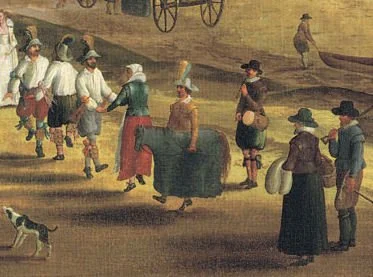
Painting of a hobby horse with Morris dancers beside the River Thames at Richmond, London; detail of Thames at Richmond, with the Old Royal Palace, c. 1620 (Fitzwilliam Museum, unknown artist)
Popular paintings and depictions showed hobby-horses (always male) dancing, prancing, flirtatious- interacting with crowds during festivals, and were often were associated with fertility when they danced at maypole events.
‘Hobby-horse’ was common slang at the time for a (female) whore, and the term appears in four Shakespeare plays:
“But when the Hobby-horse did wihy, / oh pretty wihy, / Then all the Wenches gave a tihy, / oh pretty tihy.” (18)
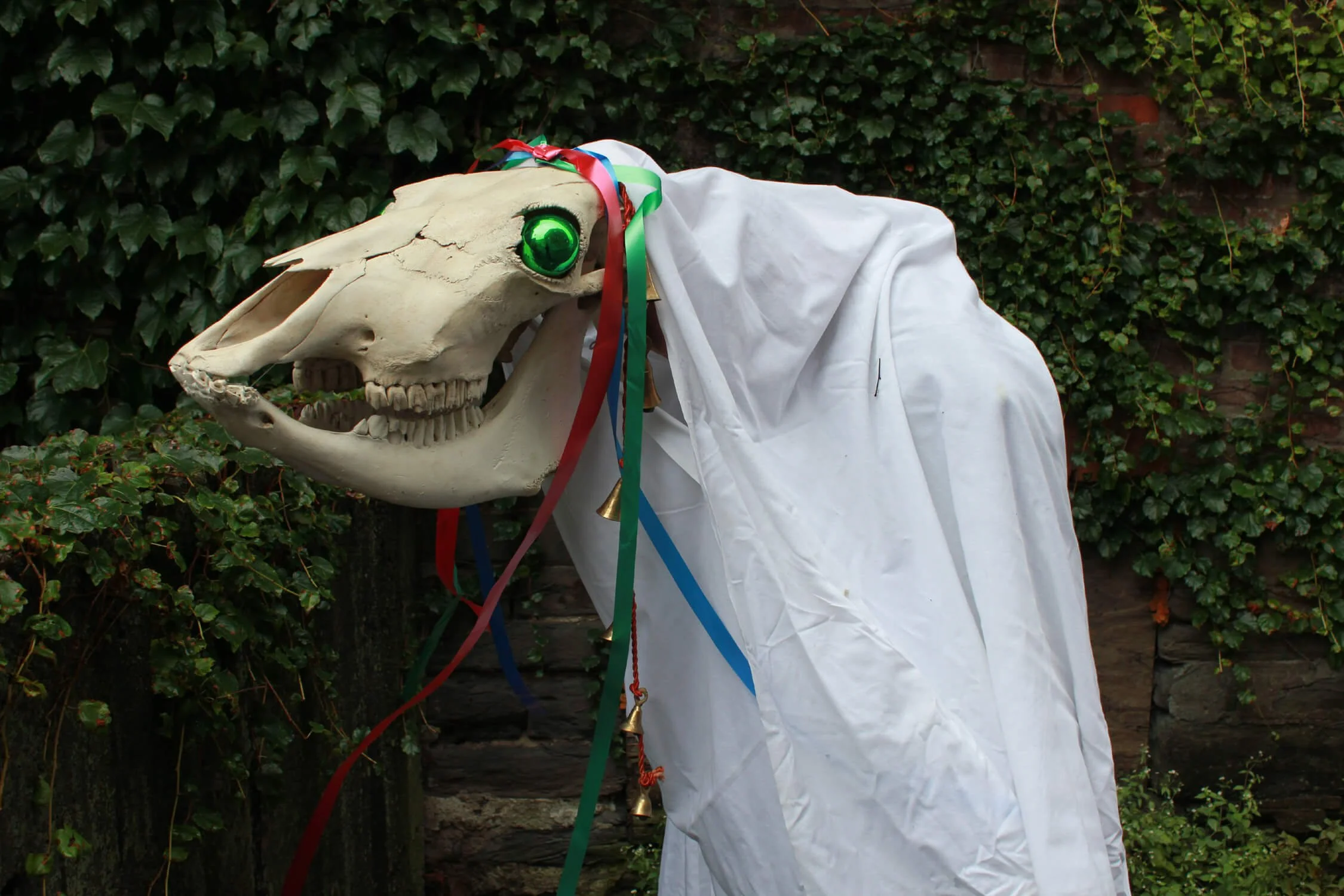
Mari Lywd. Image by R. Fiend
As we’ve talked about sexuality and violent male centaurs, an interesting story from Greek mythology is the tale of Chiron’s daughter, Ocyrhoë (19). Ocyrhoë is outwardly human rather than a centaur, but she has intermitted powers; ‘arts;’ from her father, and perhaps his gender duality.
Ocyrhoë’s has intuitive powers which are male coded. So symbolically she’s a woman with male powers and reason. However, she is turned into a full horse for revealing the god’s plans. She obviously protests:
“Whole horse? But why? My father is but a centaur!”
She is aware of her equine instincts sharpening as she begins to change into a horse- her appetite for grass is the first thing she notices, and ‘open fields, where I can freely ride,’ that strongly suggest that her equine instinct is feminine. It feels to me that she was punished for being one thing or another, and turned into her more natural state- a full horse.
Worldwide, horses also have a strong association with death and the underworld in general. Not surprising when horses have carried people into bloody battles around the world for centuries. Several cultures have their own mythical horse figure that either carries people into the underworld, or foretell sickness or death.
And as death and sex are often closely associated with each other, and the horse’s role in creation myths and association with water and the moon- they’re often associated with sexuality and fertility. The goddess of fertility Demeter, mother to Persephone who married the god of the underworld Hades, was sometimes depicted with a horses head and a human body.
When we think of a young stallion we tend to automatically think of sexuality and fertility. ‘Stallion’ is a word often used for a man who has reached his sexual peak. And it’s almost too obvious to mention, but the slang ‘riding’ is nearly always sexual. And cruder still- ‘hung like a horse.’
The Masculine Camp
The exaggerated masculinity of the centaurs can seem queer. Camp, even.
When we think of camp, we tend to think of exaggerated femininity, but exaggerated masculinity can also be camp. Think of hyper masculine Arnold Schwarzenegger with his huge, greased up muscles in 80’s films such as Terminator.
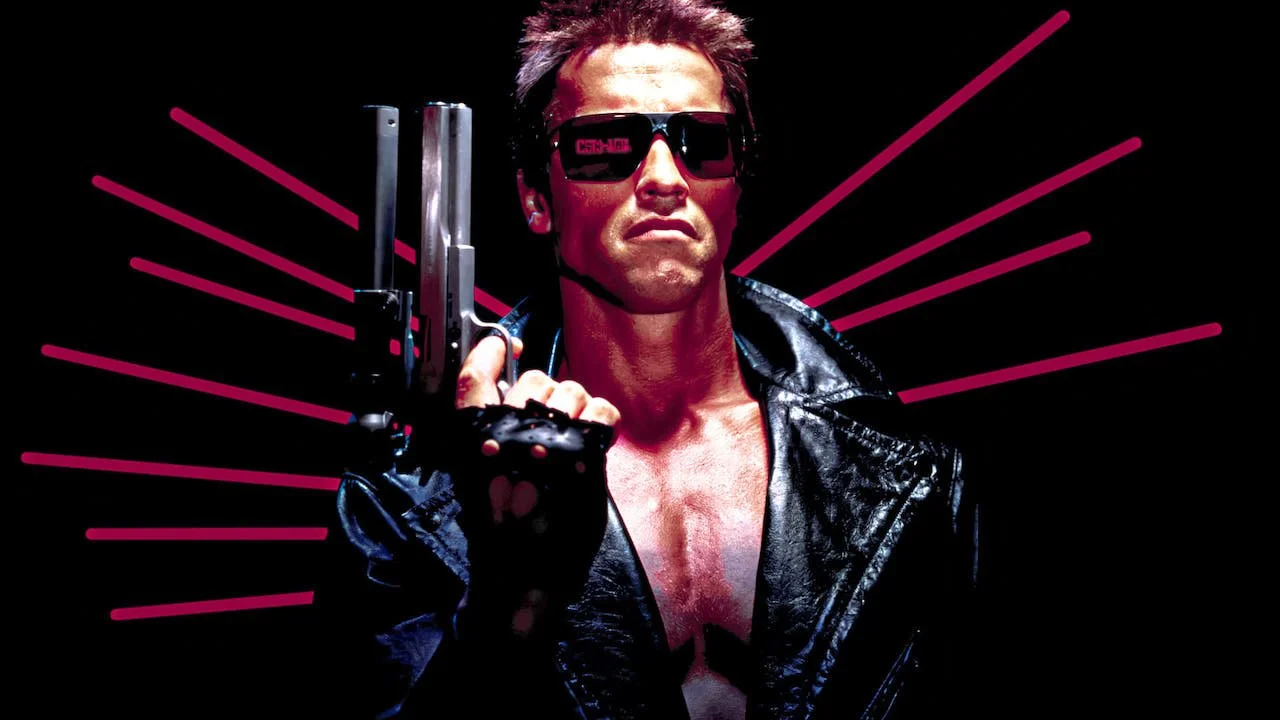
Promotional image for The Terminator (1984)
When I think of masculine camp, I also think of centaurs being too much- heaving boulders, raping anything in sight, drinking too much, starting fights, etc. All the most negative traits associated with masculinity.
Mark Booth suggests that the marginal is seen as traditionally feminine due to women being marginalised. (20)
Camp can be: artificiality, acting ‘against type’/status quo, parody and playfulness, or both excess or too little of something.
When I think of masculine camp I think of impossibly shaped men drawn by artist Tom of Finland. They’re smooth, muscled, wrapped in gleaming leather with perfect hair and tailored uniforms. The comic strip style stories that Finland drew are also often comedic as well as joyful.
Paul Barker in his book Camp! notes:
“During a period where homosexuality was criminalised and stigmatised, these men were pictured as happy, grinning knowingly, as if they’re thinking, ‘isn’t this a lark!’ A camp sensibility suffuses the gay erotica of the 1950’s and 1960s, arguably making it more subversive than the more serious-minded and explicit stuff that was to follow in later decades.” (21)
Artist Bob Mizer also created hyper masculine worlds that were often homoerotic. He posed men as classical statues, and with cowboys hats and construction uniforms:
“[…] despite the huge muscles, there is something feminine about the models too - perhaps, because, typically, it is women who are looked at.” (22)
And what was more camp than Ken in his Mojo Dojo Casa House in the Barbie film? In his cowboy hat, fur coat, bare chest and horse iconography everywhere? Like Bob Mizer’s photographs, and like the band the Village People, Ken and his friends are draped in stereotypes associated with cultural masculinity. Phillip Core also said that “Camp is gender without genitals,” which is also very appropriate here!
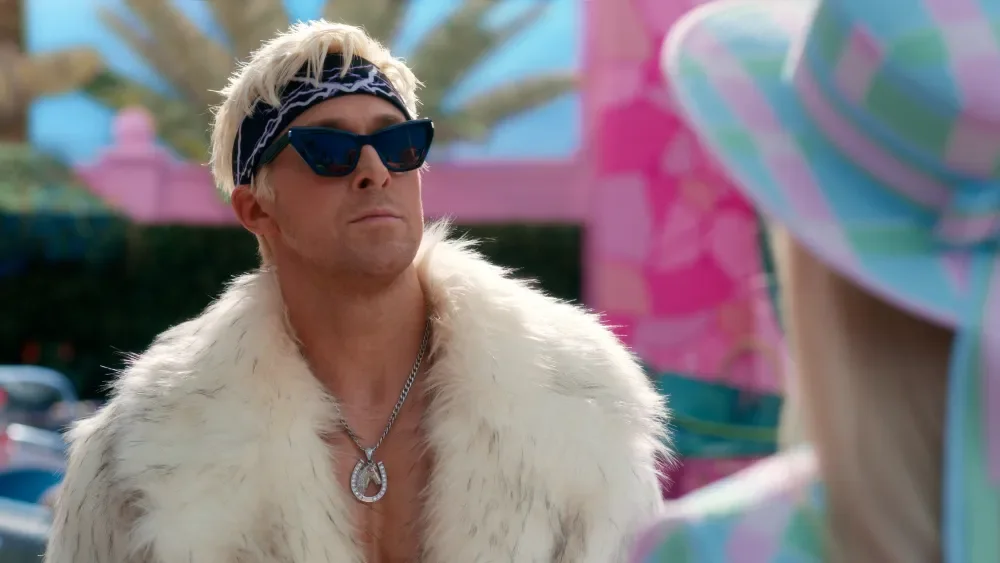
Barbie (2023)
Judith Butler views gender as performance (23), so someone ‘camp’ could be copying the wrong target, or the copying is so exaggerated that that it draws too much attention to itself. Ken’s misunderstanding of patriarchy as horse themed is a good example.
That horses directly represent Ken’s idea of patriarchy in Barbie is also interesting because of horses being historically female coded. Which makes Ken’s quote that ‘horses are just men extenders’ even funnier, that the film emphasises that Ken himself is an accessory to Barbie.
And the scene of the Kens riding into Barbieland on invisible (horses? hobby-horses?) is possibly more camp than if the (hobby)horses had been real.
How centaurs appear in media
Coming back to ancient Greece, there is a long bloody, camp, and frankly homoerotic battle of centaurs when they interrupt a wedding and try to steal away the bride (and any other women they can lay their hands on) in Ovid’s classic book Metamorphoses. (24)
It’s all very violent, overtly sexual, with lots of thrusting at each other with sharp phallic objects (25) and suggestive phrases. A centaur is killed with an ‘antique mixing bowl, engraved elaborately,’ and ‘bits of his brain, gobbets and gore and wine came vomiting out of his mouth.’
The centaurs all use long thin phallic coded items such as clubs, table legs, trees, stag antlers and bulls horns, but the humans use yonic (26) and domestic items such as cups, jars and curved basins that are symbolically vagina and womb coded, to fight the centaurs.
The human Theseus even mounts the centaur Bienor, who is ‘accustomed to no rider but himself,’ has a ‘trashy mouth,’ and while carrying a pine tree and a javelin spear, ‘pinned [Theseus] to a firm oak.’
Another centaur has a ‘knotty cudgel’ (in reading this I realise I know too much about the omegaverse) The spear that kills centaur Demoleon pierces both his human and equine body, suggestive of penetrating both the male and female parts of the centaur.
Nestor thrusts his ‘sword up through [a centaurs] testicles’ ‘buried in the balls of Cymelus!’
The centaur Latreus mocks his human opponent Caenis: ‘Are you supposed to be my match? In my eyes you’ll always be a woman.’ and tells him to go back to womanly chores and ‘leave the war to men!’, suggesting that the humans definitely represent women in this battle.
A human muses about the fighting: ‘What a disgrace that our nation is overwhelmed by one not quite a man- but yet he is a man, while we seem more like he used to be, the fault of our indecisiveness.’ Indicating that he feels the centaurs are human, and not quite human at the same time. Masculine, but not. Monstrous.
Caenus is then crushed by a ‘monstrous heap of trees’, essentially a heap of heavy symbolic penises, which finally finishes him off.

In the middle of all of this battle, a Romeo and Juliet style centaur love story takes place. One in which the male centaur Cyallarus, as well as his female mate, is described as beautiful.
We also get a long description of the beauty- golden hair, just old enough to have a beard, hair fell straight to his flanks, his human body parts are ‘equal to an artist’s masterpiece.’ Even his equine parts are ‘not inferior to the man’s beauty.’ (25)
‘His breast so muscular!’
Together he and his lover, Hylonome; the ‘comliest of females’; roamed and ‘explored the caves’, again symbolic of vaginas and wombs. But tragedy strikes this short story- Cyllarus is pierced by a phallic javelin from an unknown assailant: ‘that entered you, Cyllarus, just at the sternum.’ Hylonome, devastated, kills herself with the same javelin. Again, the male and female are pierced by the same phallic weapon.
Centaurs, despite being very sexualised and violent at times, often appear in children’s media in as a watered down mystical creature.
Chiron from Greek mythology appears in Percy Jackson’s book and film series, Percy Jackson & the Olympians. This series is directly influenced by Greek mythology, so Chiron appears as a very similar character to his mythological counterpart. In keeping with his identity as a trainer of heroes, he appears as a mentor to the protagonist Percy. He is also director of Camp Half-Blood, which trains young people who have at least one greek god as parents.
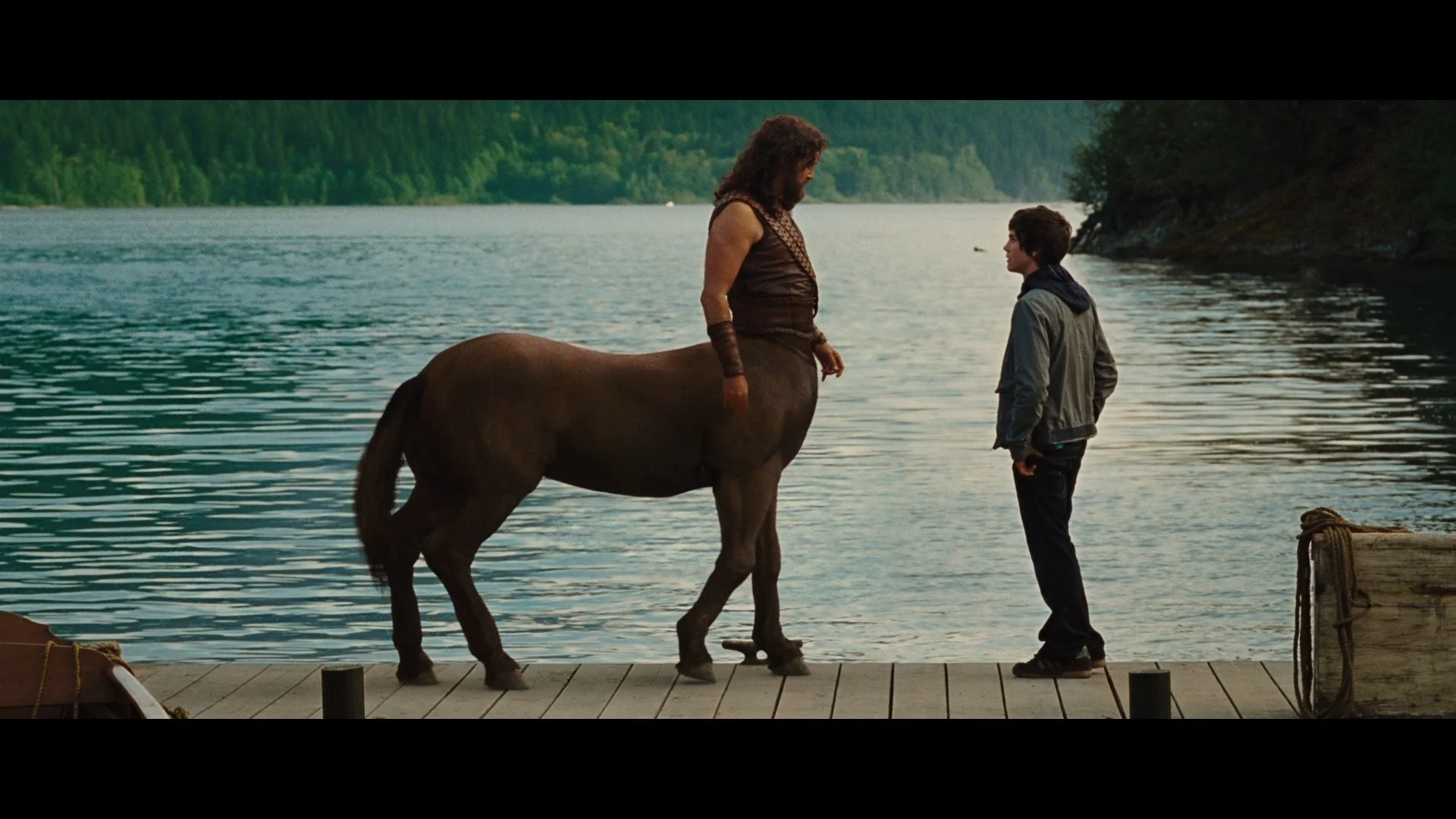
Percy Jackson & the Olympians: The Lightning Thief (2010)
As this is a children’s series, the centaurs are relatively tame, noble and wise like Chiron. And rather unremarkable. A centaur organisation known as ‘Party Ponies’ help the protagonist in a further book in the series, and as they are good fighters, they take part in a final battle scene.
An early depiction of centaurs appeared in the 1940’s Disney film Fantasia. The centaurs are pleasant looking and magical. The chapter they appear in is called Pastoral Symphony, and we see several male and female centaurs. It’s the female centaurs this time that are exaggerated the same way many female cartoon characters are, with long eyelashes, make up and big pouty lips. A couple of the centaurs prance around in an exaggerated flirtatious manner, and the male centaurs are perusing them openly, but there is nothing explicit. However, centaurs hide in the bushes, so we can’t be sure if this is meant to indicate there is something sexual going on.
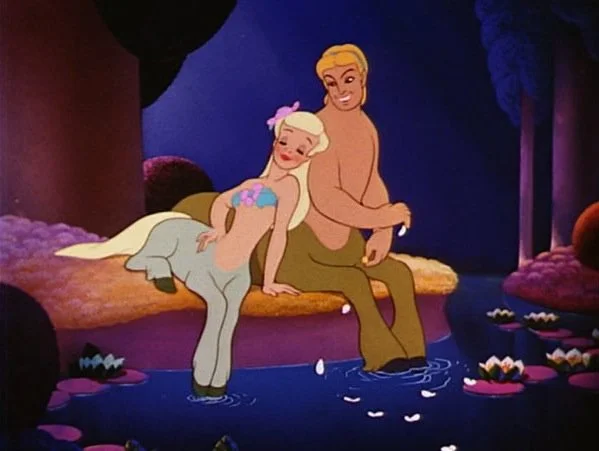
Fantasia (1940)
The original film was rightly criticised for having racially insensitive caricatures of Black people, and one place where this is the case is during the centaur scene. The two Black centaurs, Sunflower and Ottika, are both gross caricatures, and are shown serving the white female centaurs. These centaurs are also not able pair off with a mate as the other white centaurs do. As we’ve been exploring how centaurs represent animal nature, the choice to create racial caricatures of people as centaurs is doubly troubling.
Centaurs also appear in the in the film adaptations of Chronicles of Narnia by C.S. Lewis, but not the original books. The centaurs are depicted positively- they are honourable, loyal and fight alongside Aslan and the protagonists for good causes. Like depictions of Chiron, these centaurs can also see the future. Like the Percy Jackson series, they are relatively tame.
The Good Place features one centaur in season 3. In this episode the residents of the neighbourhood are allowed to choose a pet that will become an animal they’ll share a soul bond with, and snobby rich girl Tahini chooses a ‘mirror centaur’, which is a centaur that mirrors her in appearance and personality. The centaur is an exaggerated version of Tahini herself- glowing and beautiful, draped in gold, and with an arrogant and entitled attitude, capable of silencing people with a ‘withering stare.’ She won’t allow anyone to ride on her back, and demands better (horse) shoes.
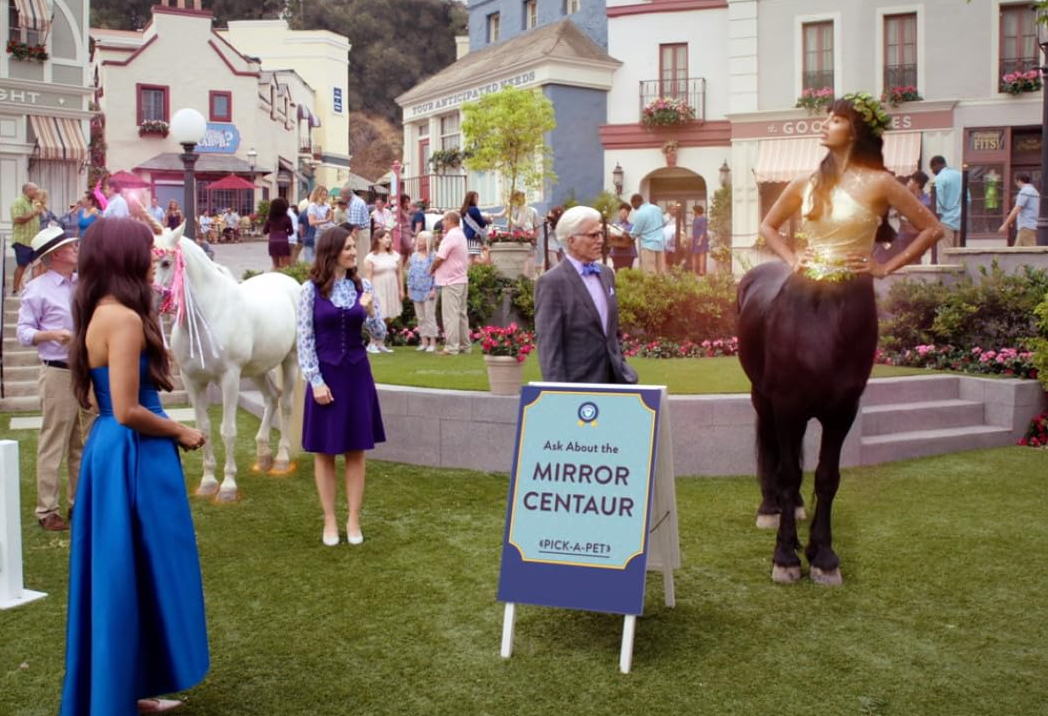
The Worst Possible Use of Free Will, The Good Place (2018)
A connection I can make between this centaur and the enduring Greek mythological version, is that this centaur is an exaggerated symbol of the worst traits we have as humans - notably Tahini’s. The centaur mirrors back an exaggerated, dare I say camp, level of haughtiness and vanity.
BoJack, then protagonist of the animated TV show BoJack Horseman is a reversed centaur- like the goddess Demeter he has a horse head (female coded) and a human (male coded) body, so I was interested because I wondered if this might suggest he was an inversion of a the centaur archetype.
BoJack is an alcoholic and troubled character who makes unethical choices. His body is that of a human man, so maybe that more accurately reflects a more modern view of centaurs. His body is human, and we see him walk about, wear clothes, drive, etc, as a human would.
And his horse head potentially reflects his more wild and instinctual reason and judgement. His face, voice and head is animal. He’s seen as a horse and referred to as one.
BoJack is an impulsive character who could do with thinking more before he acts, and is prone to addictions and vices. We could say he struggles to control his instincts.
For as much as he participates in society upright like a human, driving, working, doing TV interviews, BoJack cannot separate himself from his animal nature. And perhaps that’s why he struggles to function in a capitalist society. Maybe Bojack would be happier in a life that catered to his wilder instincts and let him roam free.
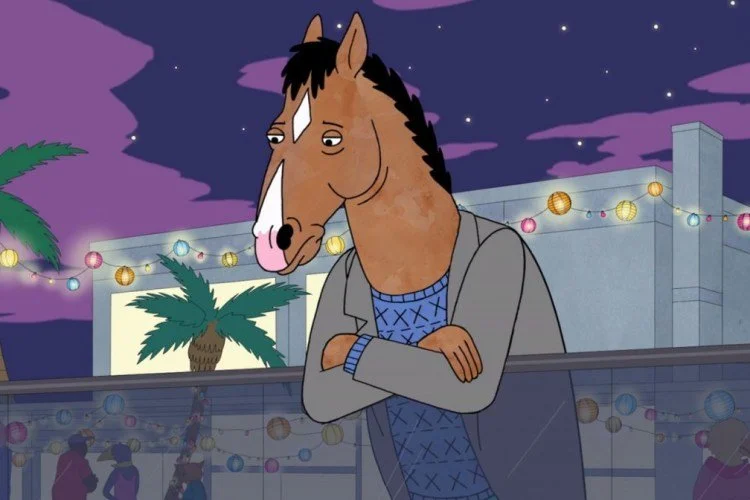
BoJack Horseman (2014)
Conclusion
The image of the centaur is a long enduring archetype, likely due to the popularity of Grek an d Roman myths, particuarly the character Chrion who has come to life again and again withv few changes.
BoJack Horseman is the most modern interpretation of this creature, which makes sense as the modern world of late stage capitilism is a very different place to live in.
Will we see more BoJack’s who are acknowledging our wild instincts and returning to the natural world?
Associated Archetypes
Similar archetypes: Minotaur, Satyr, Fawn
Horse
In early folk memory from around the world, horses were said to have appeared from the darkness at the beginning of time, leaping from the bowels of the earth or the sea in cthunian mythology, and considered a lunar creature that naturally have powers. They also represent fire, earth and water due to their key role in creation myths.
The sea god Poseidon was said to have gifted horses to us, and we can see them today in the ‘white horses’ of waves racing to shore. They can also symbolise the morning arriving, pulling the sun god’s chariot every morning across the sky. The Ewe people in Africa believed the rain god galloped across the sky on a horse.
In Japan horses are associated with protection and longevity and are often seen displayed in Shinto temples, and in China horses often take the place of dragons in stories.
It was relatively common in different cultures to sacrifice horses to the gods. In the Iliad Achilles sacrifices four horses so they may carry the spirit of Patroclus to the Underworld.
Most mythological horses representing death are black, but some are white, or more accurately ‘pale’. In TV show Twin Peaks the white horse represents “the white of the eyes and the darkness within”, meaning the horse appears when people look the other way when they see crimes or evil.
Many death horses are associated with the sea, rivers and other water bodies, and many, such as the Scottish kelpie, will harm humans if they cross their path. The English word nightmare refers to a death horse, as is cauchemar (France), mora (Polish), and mura (Czech).
Hobby-horse
A hobby-horse is a costumed character that features in some traditional seasonal customs, processions and similar observances around the world, particularly in Northern Europe. In England, they are particularly associated with May Day celebrations.
Like centaurs, hobby-horses are often associated with fertility and sexuality, especially when Shakespeare began adding those references into his plays.
Cloud
Clouds are a liminal archetype that symbolise changeability and changing patterns. They can often be symbols of dreaming, and the minds ability to project dreamscape into reality.
I told the story of Zeus/Jupiter making a cloud version of his wife, but he has also turned himself into a cloud to copulate with human women. There’s a famous painting called Jupiter and Io painted by Correggio in 1530 which shows a woman Io in ecstasy being embraced by a cloud. Though sexual, many read this painting as wanting to be intimate with God as a spiritual union.
In the Bible the Christian Jesus is told of coming in clouds during the apocalypse. Also Goku From Dragonball Z also travels on a nimbus cloud.
Blood
“Jung noticed the similarities between the maternal tree of life and the human circulatory system.” (28)
People of ancient Greece assigned people to four ‘humours’ (bodily fluids) Blood was symbolically like the sun and represented people who were magnanimous, warm, cordial. So blood could be let to tame a fiery disposition and lustful feelings and thoughts. Monks would have their blood let to help rid them of their attachment to their worldy goods, and ladies of court were blood let into basins to cure blushing, but it sometimes killed them.
In Christianity the blood of Jesus is represented by wine, and followers drink it to drink of his life in communion.
Womb / Pot / Cave
Pot making was considered a sacral, creativity activity, and in many ancient cultures as a woman’s activity.
Pots have often been associated with wombs, from Lepenski Vir pots from Yugoslavia in 4850BC. Caves are also often round and hollow, also symbolising of the transformative nature of a womb. Pots and vessels hold something.
Cups and bowls being used as weapons in Metamorphoses is interesting as it as these items that often represent life and death, are used in battle to maim and kill.
Penis / Phallus
Phalli were often associated with shamans and horned Gods and animals, such as the bull. They’re associated with cups where the ‘divine semen’ was poured into.
The Haloa festival in ancient Greece honoured Dionysus as the embodiment of the phallus. Wooden carvings of penises, often with foreskin and testes and painted with an eye, were carried by naked ‘phallophers’ into celebrations filled with wine and orgies. People also ate cakes shaped like genitals.
Phalli can also be symbols of violence, creative impulse, pleasure and spiritual transcendence.
Footnotes
(1) Act 4, Scene 7, lines 81–89 (line numbering varies by edition) Shakespeare, W. (2003) Hamlet. Edited by A. Thompson and N. Taylor. London: Arden Shakespeare.
(2) pg 173, Cirlot, J.E. (1971) A Dictionary of Symbols. Translated by J. Sage. Harmondsworth: Penguin Books
(3) pg 172-173, Cirlot, J.E. (1971) A Dictionary of Symbols. Translated by J. Sage. Harmondsworth: Penguin Books
(4) pg 173, Cirlot, J.E. (1971) A Dictionary of Symbols. Translated by J. Sage. Harmondsworth: Penguin Books
(5) López de Gómara, F. (1578) The Pleasant Historie of the Conquest of the West India, now called New Spayne. Translated by T. Nicholas. London: Thomas Creede.
(6) Topsell, E. (1607) The History of Foure-Footed Beastes: Describing the True and Lively Figure of Every Beast. London: William Jaggard.
(7) Book IV, lines 416–463, Ovid (2004) Metamorphoses. Translated by C. Martin. New York: W. W. Norton.(pages may vary between translations!)
(8) Topsell, E. (1607) The History of Foure-Footed Beastes: Describing the True and Lively Figure of Every Beast. London: William Jaggard.
(9) Ovid (2004) Metamorphoses. Translated by C. Martin. New York: W. W. Norton.(pages may vary between translations!)
(10) You can read more about Darwinian anxiety in relation to the gothic in: Hurley, K. (1996) The Gothic Body: Sexuality, Materialism, and Degeneration at the Fin de Siècle. Cambridge: Cambridge University Press, AND in Spooner, C. and McEvoy, E. (eds.) (2022) The Routledge Handbook to the Ghost Story. London: Routledge. (Big overview of hauntings of all types- I found the ghost animals chapter really useful for this archetype, as it contained lots of information about Darwinian anxiety)
(11) Book XII, lines 315-326, Ovid (2004) Metamorphoses. Translated by D. Raeburn. London: Penguin Books. (pages may vary between translations!)
(12) Wither, G. (1635) ‘Viribus iungenda Sapientia’, in A Collection of Emblemes, Ancient and Moderne. London: Henry Taunton, p. 103 (Leaf Q1r).
(13) page 173, Cirlot, J.E. (1971) A Dictionary of Symbols. Translated by J. Sage. Harmondsworth: Penguin Books
(14) Plato (2005) Phaedrus. Translated by C. Rowe. London: Penguin Books.
(15) Boehrer OR Davis, G. (2012) Parthenope: The Interplay of Ideas in Vergilian Bucolic. Leiden/Boston: Brill.
(16) Shakespeare, W. (n.d.) King Lear. Folger Digital Texts. Available at: Folger Shakespeare Library (Accessed: 25 March 2026).
(17) Pikli, N. (2020) ‘Hybrid Creatures in Context: Centaurs, Hobby-horses and Sexualised Women (Hamlet, King Lear, The Two Noble Kinsmen)’, Academia.edu. Available at: Academia.edu article page (Accessed: 01 March 2026).
(18) Act 3, Scene 6, Shakespeare, W. (n.d.) King Lear. Folger Digital Texts. Available at: Folger Shakespeare Library (Accessed: 03 March 2026).
(19) Book XII, lines 210–535, Ovid (2004) Metamorphoses. Translated by C. Martin. New York: W. W. Norton.
(20) Booth, M. (1983) Camp!. Edited by P. Barker. London: Quartet Books.
(21) page 153, Booth, M. (1983) Camp!. Edited by P. Barker. London: Quartet Books.
(22) page 153, Booth, M. (1983) Camp!. Edited by P. Barker. London: Quartet Books.
(23) Butler, J. (1990) Gender Trouble: Feminism and the Subversion of Identity. New York: Routledge.
(24) Book XII, lines 210–535, Ovid (2004) Metamorphoses. Translated by C. Martin. New York: W. W. Norton.(pages may vary between translations!)
(25) Phallic means something is visually reminiscent of a penis. In film theory, it’s common for anything long and thing such as a lamp to be considered phallic, and often represents sexual tension.
(26) Yonic means something is visually reminiscent of external female genitalia such as the vulva and/or clitoris. This is lesser known, but Barbara Creeds’ amazing book The Monstrous Feminine explores many monsters with yonic features. Highly recommend!!
(27) Book XII, lines 210–535, Ovid (2004) Metamorphoses. Translated by C. Martin. New York: W. W. Norton.(pages may vary between translations!)
(28) These two books have been great for archetype research: Archive for Research in Archetypal Symbolism (2010) The Book of Symbols: Reflections on Archetypal Images. Cologne: Taschen & Cirlot, J.E. (1971) A Dictionary of Symbols. Translated by J. Sage. Harmondsworth: Penguin Books. Also Caroline Myss’s work - Myss, C. (2001) Sacred Contracts: Awakening Your Divine Potential. London: Bantam Press and her website here: https://myss.com/archetypes/
Bibliography / Reading lists
Below are key texts and articles that I found particularly important that you may want to pick up and read for further information on the topics.
You can find my ongoing Queer Uncanny reading lists on the home page here.
Centaurs
Newman, K. (1987) ‘“You’ll have your daughter cover’d with a Barbary horse”: the representation of black male sexuality in Shakespeare’s Othello’, Essays in Literature, 14(1), pp. 75–85. ( I read this during my deep dive into hobby-horses, and it was useful when exploring early attitudes to centaur/horse hybrid creatures and early modern anxieties about sexuality.)
Barker, P. (2004) Camp! The Story of the Attitude That Conquered the World. London: National Portrait Gallery Publications. (Accessibly written book about the cultural history of camp aesthetics- this was very useful!)
Booth, M. (1983) Camp. London: Quartet Books. (also a fantastic book about camp as performance and queer coding.)
Robertson, P. (1996) Guilty Pleasures: Feminist Camp from Mae West to Madonna. Durham, NC: Duke University Press. (Feminist readings of camp, performance and gender play- I found it useful to read Booth and Parker’s book first, then come to this one)
Ravelhofer, B. (1999) ‘Hybrid creatures in context: centaurs, hobby-horses and sexualised women in Hamlet, King Lear, and The Two Noble Kinsmen’, in Fudge, E. (ed.) Renaissance Beasts: Of Animals, Humans, and Other Wonderful Creatures. Urbana: University of Illinois Press, pp. 155–179. (I didn’t think this would be so relevant, but this essay took my article in a whole new direction towards hobby-horses!! Was fantastic for pointing me towards early depictions and attitudes towards centaurs/ horse hybrids.)
Clover, C.J. (1992) Men, Women, and Chain Saws: Gender in the Modern Horror Film. Princeton, NJ: Princeton University Press. (Well known horror studies text about gendered monstrosity and body horror.)
Ovid (2004) Metamorphoses: A New Translation, Contexts, Criticism. Edited by C. Martin. New York: W.W. Norton. (There are many different translations of this book, but this came highly recommended)
Ovid (2004) Metamorphoses: A New Verse Translation. Translated by D. Raeburn. London: Penguin Classics. (Very readable poetic translation — useful if you want to engage directly with transformation myths.)
Hamilton, E. (1942) Mythology: Timeless Tales of Gods and Heroes. Boston: Little, Brown and Company. (This was an accessible overview of Greek mythology, as I came into this not knowing much about Greek mythology.)
Powrie, P., Davies, A. and Babington, B. (eds.) (2004) The Trouble with Men: Masculinities in European and Hollywood Cinema. London: Wallflower Press. (I was specifically looking at books about how men and masculininity were depictured in film.)
Halberstam, J. (1995) Skin Shows: Gothic Horror and the Technology of Monsters. Durham, NC: Duke University Press. (Queer readings of gothic monsters- really interesting)
Spooner, C. and McEvoy, E. (eds.) (2022) The Routledge Handbook to the Ghost Story. London: Routledge. (Big overview of hauntings of all types- I found the ghost animals chapter really useful for this archetype, as it contained lots of information about Darwinian anxiety)
Illustration notes
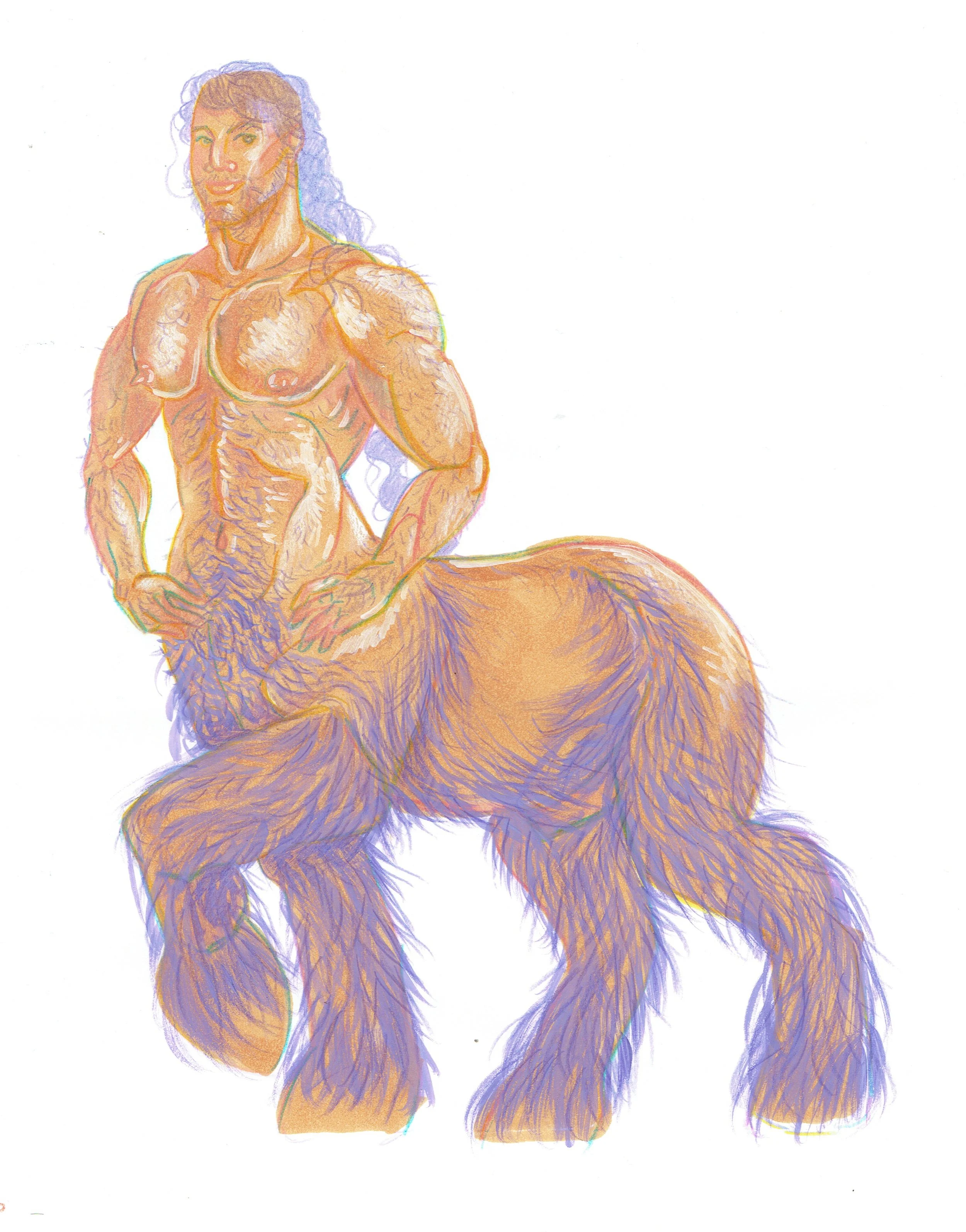
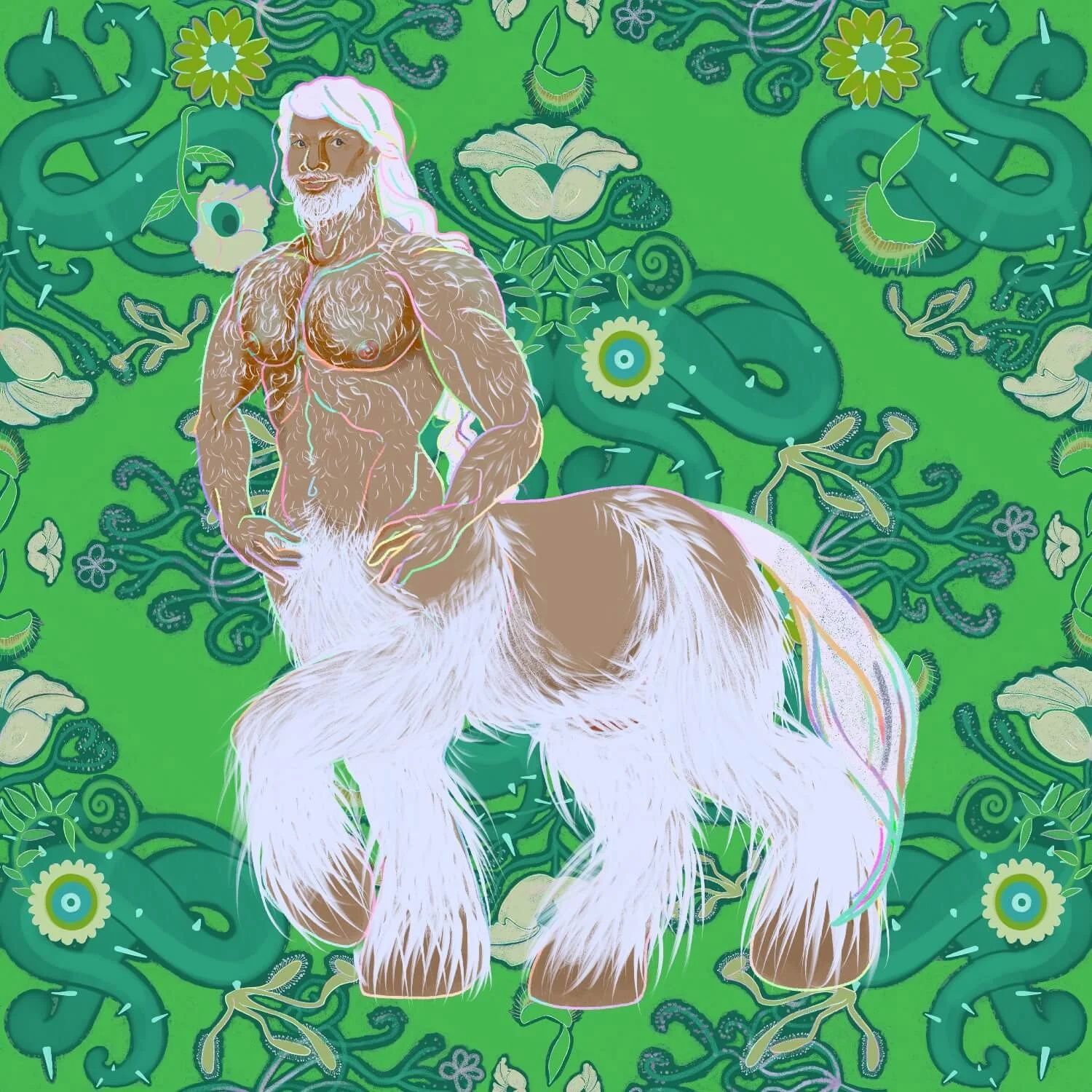
I’ve long been inspired by Tom of Finland, so it was a great opportunity to draw a very muscular centaur, paying attention to his nipples and chest, and drawing a horse body to suit his frame.
Luckily, I absolutely love heavy horses, which are the type of horses that are chunky and tall. I went on two glorious sketching trips to the Cotebrook Shire Horse Centre here in the UK to improve my horse drawing skills.
As this was the first archetype in the series, and I was simultaneously working on updating my art style, while also working out the colour palette for the whole project! I ended up going for a moodier palette and deep greens and reds, as well as some pastel coloured highlights that I’ve been using sparingly for luminescent elements and bones.
I also designed the card/archetype background aka surface design that you’ll see throughout these pages. I wanted the background to look a bit odd, a bit uncanny.
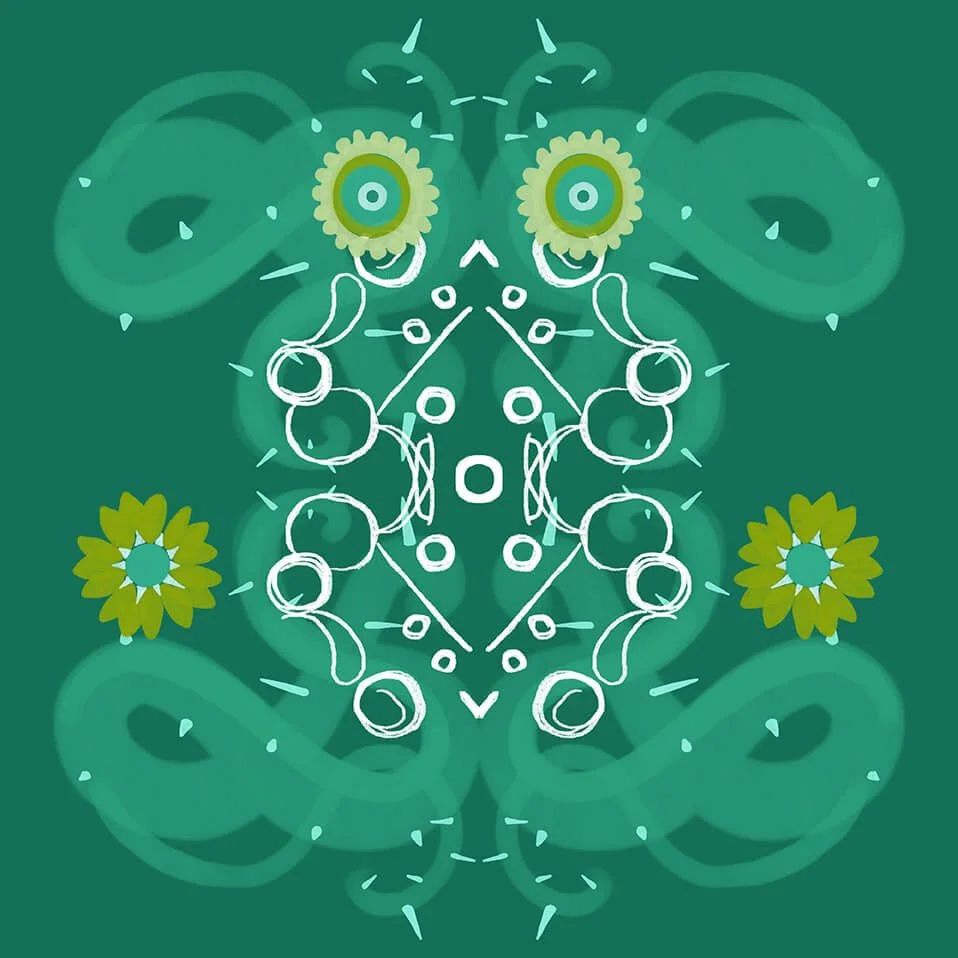
I was inspired by a research trip to Kew Gardens in London, where I sketched many dangerous exotic plants they have, including poisonous and carnivorous ones. I then added some unsettling elements like thorns and shapes that could be eyes.
Because I know I’ll be focusing on many domestic uncanny archetypes and elements, I wanted the final surface design to be reminiscent of wallpaper, so I designed in a classic diamond shape like early William Morris designs.